1
Journey profile
We review species, age, microchip, vaccination history, traveller and the countries visited during the previous six months.

A transatlantic journey planned around the pet, the traveller and the applicable U.S. entry route. UniPetrans coordinates timing, documentation checks, airline assessment and accompanied travel options.
Request Your Pet Relocation QuoteAsk Us on WhatsApp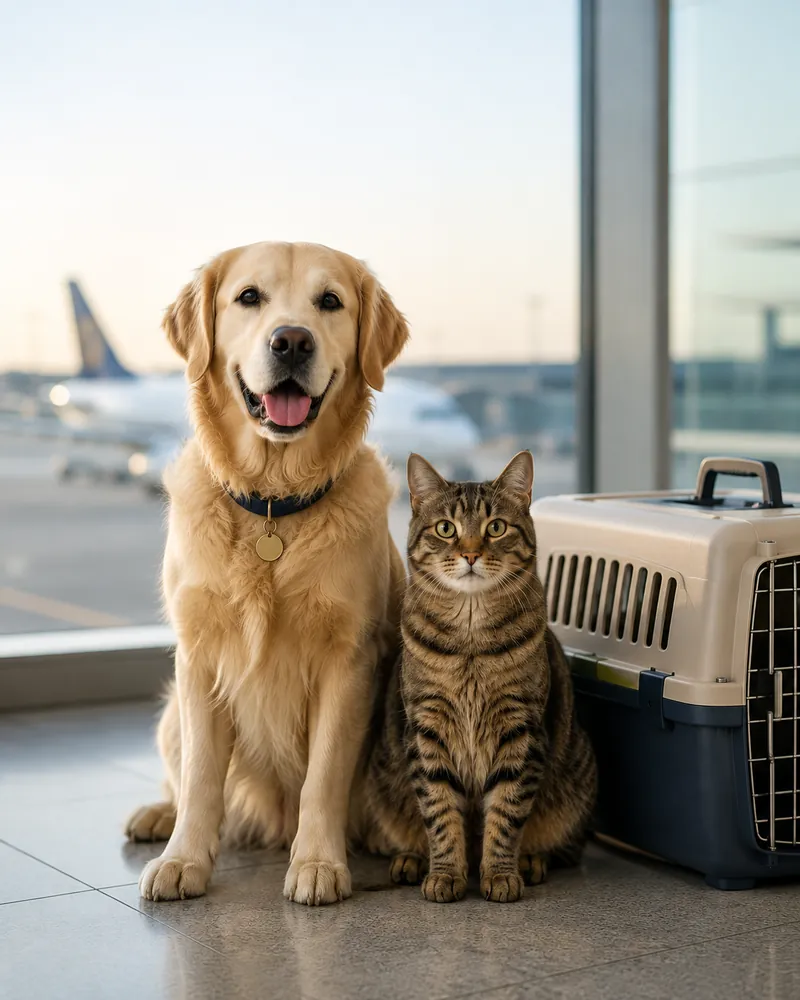
The dog or cat, recent travel history and arrival airport determine which checks belong in the plan.
We review species, age, microchip, vaccination history, traveller and the countries visited during the previous six months.
For dogs, we identify the relevant CDC pathway and the documents that must be available before boarding.
Cabin, accompanied hold or another acceptable arrangement is checked against the animal and route.
Veterinary records, carrier, booking details and traveller information are checked for consistency.
Arrival, customs interaction and final handover are planned around the chosen port of entry.
Where feasible, a UniPetrans professional can travel on the same itinerary and manage the animal-related stages from departure to handover.
Acceptance is never assumed. Pet size, carrier, airline policy, aircraft, connections and U.S. entry conditions are reviewed before the service is confirmed.
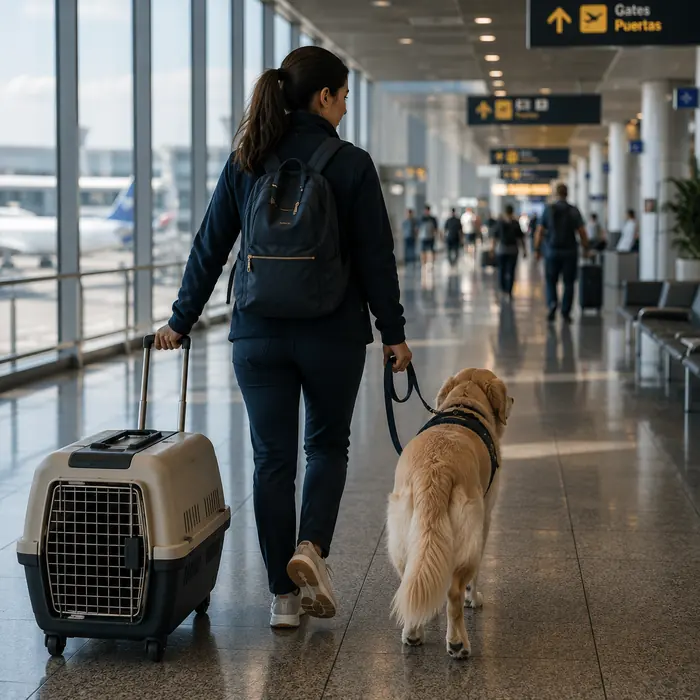
For dogs, the CDC process starts with recent travel history, identification and age. The route file should cover:
Dogs that have visited a high-risk country during the previous six months can face additional requirements even when departing from Spain. Cats follow a different federal pathway, and state or airline rules may still apply. Requirements must be reconfirmed for the actual animal and itinerary.
Official guidance: CDC Dog Import Form · CDC Dog Importation Navigator · USDA APHIS Pet Travel.
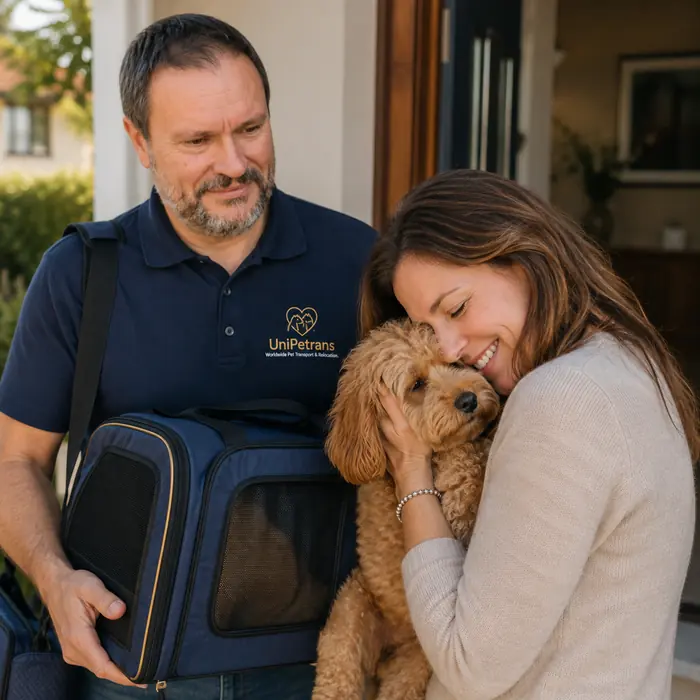
New York City is now included in the Spain to USA accompanied-travel assessment exclusively through John F. Kennedy International Airport (JFK), according to the animal, airline acceptance, recent travel history and the final handover address.
UniPetrans does not offer manifest-cargo transport. A journey is proposed only when the pet can travel under a feasible accompanied PETC or AVIH arrangement for the selected flight.
Request a Spain to NYC assessmentOrigin, destination, transit and arrival airport are assessed together.
Veterinary and official-document steps are mapped before the flight is confirmed.
A dedicated professional may accompany the pet when the airline and route allow.
Microchip, health records, traveller and itinerary details must align.
Confirmed accompanied journeys can include photos, videos and travel updates.
The destination handover is considered before departure, not after arrival.
Every dog entering the United States needs a CDC Dog Import Form receipt. Dogs must appear healthy, be at least six months old and have a microchip. Extra requirements depend on the countries visited during the previous six months and where the rabies vaccination was issued.
The CDC Dog Import Form applies to dogs. Cat entry requirements differ and state, airline and destination conditions still need to be checked for the actual itinerary.
Potentially. Accompaniment depends on the animal, airline acceptance, routing and the entry conditions that apply to the journey.
Potentially. New York City journeys are assessed exclusively through John F. Kennedy International Airport (JFK), depending on airline pet acceptance, the animal, recent travel history and the planned handover. UniPetrans only proposes an accompanied PETC or AVIH arrangement when it is feasible for the specific itinerary.
It can. The CDC assesses where a dog has been during the six months before arrival, and some transit choices can change the applicable process.
A provisional itinerary can be explored, but travel should not be confirmed until the documentary timeline and airline acceptance are compatible with the planned date.
Pricing depends on origin, U.S. destination, animal, carrier, routing and the level of accompaniment required. UniPetrans prepares an individual quotation after assessment.
Tell us the pet, Spanish origin, U.S. destination, recent travel history and approximate dates. We will review the journey before proposing an accompanied option.
Email: info@unipetrans.com
Prefer messaging? Ask us on WhatsApp
The established transatlantic route in the opposite direction.
Export and arrival planning for travel from Spain to Thailand.
Explore journey planning and route-specific guidance.